
Massachusetts Continuing Legal Education, Inc., MCLE | New England
Sign In:

password (forgot password?)
email address

Print Book

 
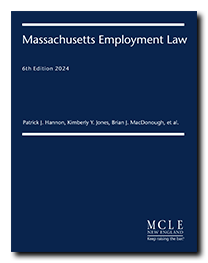
Massachusetts Employment Law

Strategies for both sides

Product Number: 2000269B00
Publication Date: 6/20/2011
Edition: 3rd Edition 2009, with 2011 Supplement
Copyright: © 2011 MCLE, Inc.
Update service: Supplemented regularly.
Formats: Print Book    add to cart | add to Favorites
1404 pages in 2 volumes (Looseleaf)
$245.00; $220.00 MCLE Sponsor Member

eBook    add to cart | add to Favorites
EPUB, MOBI, or PDF
$245.00; $220.00 MCLE Sponsor Member

Features...
  • Comprehensive two-volume resource
  • 1,314 pages of practical guidance from 66 authors
  • Employer-side and employee-side advice
  • Index and table of authorities
  • Looseleaf format for interfiled supplements

Product description

Whether you advise corporate America, the 'mom-and-pop' business, the non-salaried worker, the executive, or the independent contractor, Massachusetts Employment Law can help you sort through the many statutes and regulations-both state and federal-that provide causes of action and defenses to volatile workplace disputes. Filled with step-by-step guidance, coverage of important case law, and practical tips, this comprehensive manual will ensure you have the resources you need to recognize the issues and plan an effective course of action for your client.

Table of Contents

expand all | collapse all
Chapter 1 - Introduction to the Practice of Employment Law (Buy Chapter)
Introduction
Internal Dispute Resolution
Case Intake
Representing the Individual
Representing the Employer
Case Evaluation
Representing the Individual
Evaluate the Client
Evaluate the Defenses
Evaluate Crediting and Discrediting Evidence
Evaluate Damages
Representing the Employer
Fairness
Investigation
Annotated Chronology
Multiple Representation
Insurance Coverage
Legal Analysis
Get It Right the First Time
Advocacy
External Resolution
Alternative Dispute Resolution
Mediation
Arbitration
Agency Proceedings
Judicial Proceedings
Judicial Review of Agency Decisions
Trial
Making Your Decision
Exhibit 1C - Ten Frequently Asked Questions (Buy Form)
Exhibit 1A - A Massachusetts Employment Lawyer’s Checklist: Claims, Defenses, and Counterclaims (Buy Form)
Exhibit 1B - Procedures for Private Complaints (Buy Form)
Chapter 2, Part I - Employment Contracts: An Employee Perspective (Buy Chapter)
Written Contracts
Covenant of Good Faith and Fair Dealing
Generally
Development of the Law Since Fortune
Intentional Deprivation of Benefits Earned but Not Received
Termination Without Good Cause Resulting in Deprivation of Compensation to Employee for Past Services and Financial Windfall for Employer
Generally
Stock Options
Covenants Not to Compete
Scope of Enforcement Is Limited to What Is Reasonably Necessary to Protect an Employer's "Legitimate Business Interests"
Employers' Three "Legitimate Business Interests"
Trade Secrets
Confidential Information
Good Will
Ownership of Good Will
Sale of Good Will
Reasonableness in Space and Time
Reasonable in Space (Geographical Area)
Reasonable in Time
Limits on Covenants Not to Compete
Physicians
Attorneys
Financial Services
Broadcasters
Nurses
Licensed Social Workers
Mandatory Arbitration Clauses
Federal Court Decisions
Historical Overview
Current Case Law
Challenges to Arbitrability
New Federal Legislation
Mandatory Arbitration of Statutory Claims of Individuals Who Work Under Collective Bargaining Agreements
Massachusetts State Court and Agency Decisions
Settlement Agreements
Collective Bargaining Agreements
Oral Contracts
Implied Contracts
Employee Handbooks and Personnel Manuals
Factors Used to Determine Whether a Manual Creates a Binding Contract
Conduct of the Employee
Conduct of the Employer
Negotiations
Stated Term of Employment
The Employer's Right to Unilaterally Modify the Manual Versus the Employee's Reasonable Belief that Employment Would Continue According to the Terms Set Forth in the Manual
Disclaimers
The Employee's "Reasonable Belief"
Progressive Discipline Policies
Chapter 2, Part II - Employment Contracts: An Employer Perspective (Buy Chapter)
Overview
Sources of Contractual Obligations
Written Agreements
Implied-in-Fact Agreements
Oral Statements or Promises
Personnel Manuals, Policies, and Conduct of the Parties
Types of Claims
Breach of Contract
Contracts of Indefinite Term
Contracts Terminable Only for Just Cause
Promissory Estoppel
Breach of Implied Covenant of Good Faith and Fair Dealing
Defenses in Employment Contract Cases
Statute of Frauds
Lack of Required Authority
Preemption
Indefiniteness
Absence of Condition Precedent
Enforceability of Arbitration Provisions
Contract Damages
Contract for Definite Term
Contract for Indefinite Term
Mitigation of Damages
Strategy Options Checklist
Chapter 3 - Common Law Tort Claims in the Employment Context (Buy Chapter)
Overview
Preemption and Preclusion
General Laws c. 151B Exclusivity
Workers' Compensation Exclusivity
Federal Labor Law
Section 301 Preemption
Garmon Preemption
Employee Retirement Income Security Act
Specific Tort Claims
Defamation
Elements
Defenses and Definitions
Publication
Conditional Privilege
Absolute Privilege
Falsity
Opinion Versus Fact
Relevant Statutory Authority
General Laws c. 231, § 91
General Laws c. 231, § 92
General Laws c. 231, § 93
General Laws c. 231, § 94
General Laws c. 231, § 59H
Damages
Interference with Contractual or Advantageous Relations
Elements
Malice and Improper Means
Extent of Interference
Intentional Interference-Damages
Wrongful Discharge in Violation of Public Policy
Introduction
Sources of Public Policy
Refusal to Testify Falsely
Enforcing Safety Laws
Cooperation with Criminal Investigation
Consulting With An Attorney
Internal Complaints
Parenting Obligations
Statutory Basis for Public Policy
Defenses
Damages
Specific Whistleblower Statutes
General Laws c. 149, § 185
General Laws c. 149, § 187
Sarbanes-Oxley
Intentional Infliction of Emotional Distress
Elements
Defenses
Outrageousness
Severity
Negligent Infliction of Emotional Distress
Elements
Definitions and Defenses
False Imprisonment
Elements
Defenses
Reasonableness
Confinement
Damages
Assault and Battery
Introduction
Elements
Assault
Battery
Damages
Malicious Prosecution
Elements
Defenses
Damages
Abuse of Process
Elements
Defenses
Damages
Fraud, Deceit, and Misrepresentation
Elements
Defenses
Damages
Negligent Misrepresentation
Elements
Defenses
Damages
Negligent Hiring, Retention, and Supervision
Indemnification and Contribution
Strategy Considerations
Plaintiff's Perspective
Defendant's Perspective
Chapter 4 - Overview of Employment Discrimination (Buy Chapter)
Introduction
The "Black-Letter Law" in Disparate Treatment Cases
Plaintiff's Obligation Under Massachusetts Law at the Third Stage of the Burden-Shifting Framework
Adverse Impact Claims of Discrimination
Chapter 5 - Age Discrimination (Buy Chapter)
Controlling Authority and Types of Claims
The General Prohibition Against Age Discrimination
The Burden of Proof
Disparate Impact
Disparate Treatment
Burden Shifting Analysis
The Prima Facie Case
The Defendant's Articulated Response
Proof of Pretext
Mixed Motive Analysis
Firing Older Workers to Save on Salary or Benefits Costs
Retirement Issues
Defenses
Statutory Defenses
Bona Fide Occupational Qualification
Reasonable Factors Other Than Age and Good Cause
Bona Fide Seniority System, Bona Fide Employee Benefit Plan, or Retirement Policy
Other Statutory Defenses
General Defenses
Business Justification
Neutral Criteria
Age
Remedies and Damages
ADEA Damages
General Laws c. 151B Damages
Deadlines and Procedural Requirements
Administrative Charge
Other Prerequisites for Pursuing a Civil Action Under G.L. c. 151B
Removing Charge from the MCAD
Limitations Period for Filing G.L. c. 151B Civil Action
Other Prerequisites for Pursuing a Civil Action Under the ADEA
Required Waiting Period
Limitations Period for Filing an ADEA Civil Action
Choice of Law and Forum
Survival of Claims
Settlements and Releases
General Requirements
Requirements Specific to Employment Termination Programs
EEOC's Enforcement Power
OWBPA's Danger-No Tender Back Requirement
Strategy Checklist for Defense Attorneys
Chapter 6 - Gender Discrimination (Buy Chapter)
Discrimination on the Basis of Gender
Sexual Stereotyping
Dress and Grooming Codes
Bona Fide Occupational Qualifications
Privacy Interests/Rights
Sex-Plus Discrimination
Sex-Plus Pregnancy
Sex-Plus Marital Status
Sex-Plus Children
Sex-Plus Appearance
Claims for Equal Pay
Federal Equal Pay Act
General
Proving "Substantial Equality"
Employers' Defenses
Damages
Massachusetts Equal Pay Act
General
Comparable Work
Relationship of FEPA and MEPA to Title VII and G.L. c. 151B
Massachusetts Equal Rights Act
General
Scope and Burden
Scope
Burden
Equal Protection
Chapter 7, Part I - The Proof Involved in Litigating Claims of Sexual Harassment (Buy Chapter)
Introduction
Massachusetts Statutes
Massachusetts Case Law
Harassment by Supervisors or Managers
Harassment by Coworkers
Hostile Environments
Continuing Violations
General Laws c. 214, § 1C
Same-Sex Harassment
Office Romance with Manager
Liability
Liability of Individual Managers
Liability of General Contractors
Federal Law
Factual Elements Necessary to Establish a Claim of Sexual Harassment
Elements of a Claim of Sexual Harassment Since Harris
Dismissing Sexual Harassment Claims as a Matter of Law
Same-Sex Harassment Under Federal Law
Employer Liability for Unlawful Harassment Caused by Coworkers or Nonemployees
Affirmative Defenses Under Title VII
Types of Proof in Defending Sexual Harassment Cases
Proof Relating to Credibility
Proof Relating to Affirmative Defenses
The Policy
Distribution
Employee Responsibility
Complaint Procedure
Proof of Effective Remedial Action
Education and Training
Proof of the Actual or Apparent Subjective State of Mind of the Plaintiff
Proof Relating to Damages for Emotional Distress
Exhibit 7A - MCAD Sexual Harassment Guidelines (Buy Form)
Chapter 7, Part II - Litigating Sexual Harassment Claims: A Plaintiff’s Perspective (Buy Chapter)
Sources of Rights for Sexual Harassment Claims
State Law
General Laws c. 151B
General Laws c. 214, § 1C
Federal Law
Title VII
42 U.S.C. § 1983
Title IX
Selecting a Forum
Types of Sexual Harassment Claims
Elements of Quid Pro Quo Claim
Elements of Hostile Environment Claim
Conduct of a Sexual Nature
Welcomeness
Purpose or Effect of Creating Hostile Environment
Severe or Pervasive Conduct
Reasonableness Standard
Subjective Standard
Federal Law
Same-Sex Sexual Harassment
Employer Liability
Employer Liability for Actions of Supervisors and Those upon Whom It Confers Authority
Employer Liability for Conduct of Coworkers
Employer Liability for Actions of Nonemployees and Toward Nonemployees
Individual Liability
Individual Liability for Retaliation
Individual Liability for Interference with Protected Rights
Individual Liability for Aiding and Abetting
Filing a Claim
Statutes of Limitations
MCAD
EEOC
Court
Continuing Violations Doctrine
Chapter 151B: State Court
Title VII: Federal Court
Naming Parties
Bringing Additional Claims in Court
Proving a Claim of Sexual Harassment
Types of Evidence of Sexual Harassment
Plaintiff's Statements Regarding the Sexually Harassing Conduct and the Effect of Such Conduct
Plaintiff's Testimony at Deposition and at Trial
Employer's Statements Regarding the Conduct, Complaint, Investigation, Policies, and Remedy
The Harasser's Statements Regarding the Alleged Conduct, Plaintiff's Complaint, the Employer's Investigation, Policies, and Remedy
Witness Statements Regarding the Conduct, Plaintiff's Complaint, the Employer's Investigation, and Policies
Personnel Records of Plaintiff and Harasser
E-mail
Sexual Harassment Complaints of Other Employees
Financial Information About Employer and Harasser
Additional Evidence Required Under Federal Law
Additional Evidence to Establish Liability for Sexual Harassment
Failure to Have a Policy that Complies with G.L. c. 151B
Failure to Do Adequate Investigation and Take Prompt Remedial Action
Evidence of Retaliation
Remedies and Damages
Injunctive Relief
Back Pay and Front Pay
Emotional Distress Damages
Punitive Damages
Attorney Fees and Costs of Litigation
Chapter 8, Part I - Pregnancy Discrimination: A Plaintiff’s Perspective (Buy Chapter)
Introduction
Pregnant Women Have Protection Under the State and Federal Laws Governing Sex Discrimination
General Laws c. 151B
Title VII of the Civil Rights Act of 1964, as Amended by the Pregnancy Discrimination Act of 1978
Proving Sex Discrimination Based on Pregnancy
Disparate Treatment Analysis of a Pregnancy Discrimination Claim
Prima Facie Case
Proving Pretext
Timing
Stereotypical Remarks
Disparate Impact Analysis of a Pregnancy Discrimination Claim
Facially Discriminatory Policies That Limit Women from Performing Specific Jobs Simply BecauseThey Are Fertile or Pregnant-Analysisof a Pregnancy Discrimination Claim
Marital Status and Childcare Responsibilities
Pregnant Women with Complications from Pregnancy May Have a Viable Disability Claim Under Federal and State Law
Normal Pregnancy Ordinarily Is Not Considered a Disability
Pregnancy-Related Medical Conditions May Rise to the Level of a Disability
Statutory Law Allowing Pregnant Women the Right to Take Maternity Leave
The Family and Medical Leave Act
The Massachusetts Maternity Leave Act, G.L. c. 149, § 105D
Conclusion
Chapter 8, Part II - Pregnancy Discrimination: A Defense Perspective (Buy Chapter)
Introduction
Applicable Laws
Unlawful Inquiries
Maternity and Maternity-Related Leaves
Massachusetts Maternity Leave Act
Family and Medical Leave Act
Americans with Disabilities Act
Pregnancy Discrimination Against Employers
Employer-Mandated Leave
Pregnancy Discrimination in Employment
The Prima Facie Case
Need for Maternity Leave
Pregnancy-Related Disabilities
Terms and Conditions of Employment
Marital Status, Childcare Responsibilities, and Breastfeeding
Reductions in Force
Termination
Absenteeism and Tardiness
Performance Issues
Benefits
Short-Term or Temporary Disability
Individual Liability
Remedies Available to Successful Plaintiffs
Chapter 9 - Race, Ethnicity, and National Origin Discrimination (Buy Chapter)
Controlling Authority
Types of Claims
Racial Harassment
National Origin Discrimination
Race Discrimination Against Caucasian Employees
Unconscious Discrimination
Defenses
Challenging the Prima Facie Case
Similarly Situated Employees
Affirmative Action Plans
Strategy Options Checklist
For the Plaintiff
For the Defendant
Chapter 10, Part I - Disability Discrimination: A Plaintiff’s Perspective (Buy Chapter)
Overview
Controlling Authority: Statute, Case Law, and Guidelines
The Statute-General Laws c. 151B
Common Issues
Does the Plaintiff Have a Handicap?
Substantial Limitation
Temporary Impairments
Employee Perceived as Being Disabled
Asymptomatic Ailments
Major Life Activities
Misconduct By Persons with Handicaps
Mitigating Measures
Is the Plaintiff Capable of Performing the Essential Functions of the Position with Reasonable Accommodation?
Essential Functions
Cases in Which Various Impairments Did or Did Not Result in Disability
Reasonable Accommodation
Reassignment
Interaction Between Employer and Employee
Judicial Estoppel
Can the Employer Demonstratean Undue Hardship?
Other Defenses
What Is the Burden of Proof in a Handicap Discrimination Case?
Introduction
When the Employer's Motive Is Not an Issue
When the Employer's Motive Is an Issue
Clarification of the Plaintiff's Burden
Failure to Provide Reasonable Accommodation
Types of Defendants
Individual Liability
Public Entities
Miscellaneous
Disability Insurance Plans and Mental Disabilities
Company Seniority Rules
Harassment on Basis of Disability
Retaliation
Damages
Introduction
Strategy
Case Selection
Medical Records
Treating Physician
Understanding the Disability
Judicial Estoppel
Client's Personality
Time Limitations
Forum Selection
Administrative Agency
State Court Versus Federal Court
Arbitration
Expert Testimony
Summary Judgment
Trial
Jury Selection
The Judge
Plaintiff's Testimony
Jury Instructions
Special Interrogatories
Posttrial Motions
Source Material
Exhibit 10A - Notice Concerning the Americans With Disabilities Act (ADA) Amendments Act of 2008 (Buy Form)
Chapter 10, Part II - Disability Discrimination: A Defense Perspective (Buy Chapter)
Introduction
Controlling Authority
Statutes
Interpretations of the Law and the ADA Amendments Act of 2008
Types of Claims
Proof of Discrimination Claim
Proof of Failure to Provide Reasonable Accommodation Claim
Elements of Prima Facie Case
"Handicapped"
Working as a Major Life Activity
Manual Task Disability
Temporary Impairment
Mitigating Measures
Alcohol or Drug Addiction
Record of Impairment
"Regarded As" Claims
"Qualified"
Does the Employer Actually Require the Function to Be Performed?
Would Removing the Function Fundamentally Alter the Position?
The Duty of Reasonable Accommodation
Definition of "Reasonable Accommodation"
Modifying Job Tasks
Reassignment
Preferential Reassignment
Conflicts With Collective Bargaining Agreements
Voluntary Affirmative Action Policies
Compensation Issues
Leaves of Absence
Accommodation Where Misconduct Is Involved
Interactive Process
Preemployment Inquiries and Examinations
Defenses
Legitimate, Nondiscriminatory Reason
Misconduct
Absenteeism
Poor Performance
Undue Hardship
Direct Threat
Job-Relatedness and Business Necessity
Judicial Estoppel
Strategy Options Checklist for Employers
Chapter 11 - Religious Discrimination (Buy Chapter)
Overview
A Brief History of Massachusetts Law
Controlling Massachusetts Authority
The Burdens of Proof
Title VII Religious Discrimination Claims
EEOC Regulations
Summary of Legal Standards for Religious Discrimination in Employment
Statutes
Types of Claims
Defenses
Strategy Options Checklist
Plaintiffs
Advance Strategies
After the Fact Strategies
Chapter 12, Part I - Same-Sex Sexual Harassment: A Plaintiff’s Perspective (Buy Chapter)
Emily Sample, Esq., Law Offices of Emily Sample
Overview
Federal Law on Same-Sex Sexual Harassment
Statutory and Regulatory Authority:Title VII of the Civil Rights Act of 1964, 42 U.S.C. § 2000e-2(a)(1); EEOC Regulations
Case Law: Federal Courts' Interpretation of Title VII Regarding Same-Sex Harassment
The Oncale Decision
Post-Oncale Decisions
Recent Federal Developments and Trends
Other Federal Jurisdictions-Settlements of Same-Sex Harassment Cases
Types of Claims
Prima Facie Case and Proof Under Federal Law
Prima Facie Case
Proof of Elements
Massachusetts State Lawon Same-Sex Sexual Harassment
Statutory and Case Law
Prima Facie Case and Proof Under State Law
Prima Facie Case
Proof of Elements
State Law Developments
Credibility
Effect of Arbitration
Harasser's Sexual Orientation
Recent State Law Developments
Reported Court Decisions
MCAD Decisions
Other Resources
Chapter 12, Part II - Sexual Orientation Discrimination: A Plaintiff’s Perspective (Buy Chapter)
Overview
Controlling Authority
Preliminary Considerations
Who Is Protected?
Transgender People
Sex Discrimination
Disability Discrimination
Sexual Orientation Discrimination
Who Is Exempt?
Who May Be Held Liable?
What Standards Apply?
Disparate Treatment Claims
Nonselection in Hiring or Promotion
Sexual Orientation Harassment
Adverse Actions
Differential Treatment in Benefits
Retaliation
Disparate Impact Claims
Other Resources
Chapter 12, Part III - Same-Sex Harassment and Sexual Orientation Discrimination: A Defense Perspective (Buy Chapter)
Gail A. Goolkasian, Esq., Stop & Shop Companies, Inc.
Introduction
Controlling Authorities
Same-Sex Harassment
Statutory Bases
Evolution of Federal and State Prohibitions of Same-Sex Sexual Harassment
The Confusion Is (Mostly) Resolved
The Confusion that Remains
Recent Case Law Developments on Same-Sex Harassment
Title VII
Chapter 151B
Sexual Orientation Discrimination
Not Recognized Under Title VII
Cognizable Under State Law
Sexual Orientation Discrimination Claims
Discrimination Based on "Gender Stereotyping" Versus Sexual Orientation Under Title VII
Disparate Treatment Claims Under Chapter 151B
Hostile Work Environment Under Chapter 151B
Available Defenses
Strategy Options
Chapter 13, Part I - Overtime Provisions of the Fair Labor Standards Act and Massachusetts State Law: A Plaintiff’s Perspective (Buy Chapter)
Controlling Authority
Federal Law
Massachusetts Law
Provisions of the Fair Labor Standards Act
Overtime-29 U.S.C. § 207
Minimum Wage-29 U.S.C. § 206(a)(1)
Child Labor-29 U.S.C. § § 212(a), (c)
Equal Pay-29 U.S.C. § 206(d)
Recordkeeping-29 C.F.R. § 516
Covered Employers
Covered Employees
Employee/Independent Contractor
Exempt Employees
Executive Exemption
Administrative Exemption
Professional Exemption
Learned Professional
Creative Professional
Computer Employee Exemption
Outside Sales Exemption
Highly Compensated Employees
Motor Carrier Exemption
Blue Collar Workers
Police, Firefighters, Paramedics, and Other Responders
Other Laws and Collective Bargaining Agreements
State Law Exemptions
Enforcement of the Overtime Laws
Statute of Limitations
Exhaustion
Treble Damages
Important Issues in Overtime Law
Fluctuating Workweek
Federal Law
State Law
Commissions
"Comp Time"
Volunteers
On-Call Time
Meal Time
Sleep Time
Travel Time
Waiting Time
Reporting Time
Docking
Deductions
Premium Rates and Overtime
Prevailing Wage Rates and Overtime
Discrimination and Retaliation Prohibited
Personal Liability
Plaintiff's Checklist regarding overtime issues
Chapter 13, Part II - Federal and State Overtime Laws: A Defense Perspective (Buy Chapter)
Fair Labor Standards Act
Massachusetts Wage and Hour Provisions
Exempt Versus Nonexempt Employees
Executive Employees
Administrative Employees
Professional Employees
Computer Employees
Outside Salespersons
Highly Compensated Employees
Additional State Law Overtime Provisions
Payment of Exempt Employeeson a Salary Basis
Permissible Deductions
Impermissible Deductions
Leave Banks
Additional Compensation
Safe Harbor
Partial Day Deductions in Public Sector
Damages for Overtime Violations
Federal Law
State Law
Chapter 13, Part III - Massachusetts Payment of Wages Law—G.L. c. 149, §§ 148–150: A Plaintiff’s Perspective (Buy Chapter)
Introduction
Employers Covered
Employees Covered
Presumption of Employee Status, Three-Factor Test for Independent Contractors, Liability for Misclassification
Section 148B-First Prong: Freedom from Control
Section 148B-Second Prong: Outside the Usual Course of Business
Section 148B-Third Prong: Independent Trade, Occupation, Profession, or Business
Section 148B and Tax Revenue Regulations May Differ
Franchisees
Wages Covered
The Purpose of the Act
The Language of the Act
"Wages" and "Earned Wages"
Massachusetts Equal Pay Act
Commissions
Commission Pay Includes the Common Definition of Pay Contingent Upon the Occurrence of a Targeted Event
Discretionary Bonuses and Stock Purchase Programs
Severance Pay
Deferred Compensation
Wages Subject to Income Tax Withholding
Holidays and Vacation Pay
Lawful Deductions, Valid Set-Off, and Prohibition Against Waiver of Rights by Special Contract
There Must Be a Benefit to the Employee or Some Form of Due Process
Deductions with No Chance of an Independent Opportunity to Challenge the Deduction Are Invalid
Enforcement
Preemption Issues
Retaliation is Prohibited
Recordkeeping
Criminal and Civil Sanctions for Violations and Retaliation
The Criminal Sections Do Not Constrict the Act
Civil Enforcement-Prerequisite Filing with Attorney General
Civil Enforcement-Treble Damages
Civil Enforcement-Attorney Fees
Civil Enforcement-"Damages Incurred"
Statute of Limitations
Arbitration Agreements and the Prohibition Against Special Contracts
Conclusion
Exhibit 13A - G.L. c. 149, § 148: Covered Employers and Employees (Buy Form)
Exhibit 13B - Wage Payment Due Dates (Buy Form)
Exhibit 13C - 2008 Attorney General Advisory on Independent Contractor Law (Buy Form)
Exhibit 13D - Awuah v. Coverall North America, Inc., Order of Certification (Buy Form)
Chapter 14, Part I - The Family and Medical Leave Act: A Plaintiff’s Perspective (Buy Chapter)
Introduction
Coverage
Employers Who Are Covered by the FMLA
The Term "Employer" Includes Individuals
Eligibility
Employee Eligibility Requirements
Exception for Certain Highly Compensated Employees
Circumstances in Which Employees May Take FMLA Leave
Purposes of Leave
How Much Leave Can Be Taken
Employer Must Define the Twelve-Month Period
Leave May Be Taken on a Reduced or Intermittent Basis
Substitution of Paid Leave for Unpaid Leave
Definition of "Serious Health Condition"
Notice and Informational Requirements
Notice by Employee to Employer
Employer Must Post Notice of FMLA Requirements
Employer Must Also Have a Written FMLA Policy
Employer Must Provide Information About Eligibility and Rights and Responsibilities When Employee Requests Leave
Designation of FMLA Leave
Certifications for Leave
Medical Certification to Substantiate Leave
Fitness for Duty-Medical Certification to Return from Leave
Certifications for Military Leave
Health Benefits for Employees on Leave
Job Restoration
Discrimination, Retaliation, and Interference Prohibited
Relationship of FMLA Leave to Other Employer Policies
Enforcement
Filing a Complaint
Standard of Proof
Standard of Proof for Violation of Prescriptive Rights or Entitlements Where Intent Is Not an Issue
Standard of Proof for Violation of Proscriptive Rights Where Intent Is an Issue
FMLA Is to Be Construed Broadly
Remedies
Who May File a Claim?
Individuals May Be Liable for Violationsof the FMLA
Settlement and Release of FMLA Claims
Interplay of FMLA With Other Statutes
Statutes Prohibiting Disability Discrimination
Workers' Compensation
Massachusetts Maternity Leave Act
Fair Labor Standards Act
Small Necessities Leave Act
Exhibit 14A - FMLA Poster (Buy Form)
Exhibit 14B - Employment Standards Administration / Wage and Hour Division Fact Sheet No. 028 (Buy Form)
Exhibit 14C - Certification of Health Care Provider (Buy Form)
Exhibit 14D - Employer Response to Employee Request for FMLA Leave Form (Buy Form)
Exhibit 14E - Sample Letter to Employer Designating Leave as FMLA Leave (Buy Form)
Exhibit 14F - Employment Standards Administration / Wage and Hour Division FMLA Compliance Guide (Buy Form)
Exhibit 14G - Sample Certification Form Issued by Attorney General (Buy Form)
Chapter 14, Part II - The Family and Medical Leave Act: A Defense Perspective (Buy Chapter)
Federal Law-Introduction
Why Were the FMLA Regulations Updated?
Employers Covered by the FMLA
Private Employers
Public Agencies
Joint Employers
Employees Eligible for FMLA Leave
Worked for Twelve Months
Worked 1,250 Hours
Employer Employs at Least Fifty Employees Within a Seventy-Five-Mile Radius
Reasons an Employee Can Take FMLA Leave
Birth, Adoption, or Placement of Child
Employee Is Needed to Care for Spouse, Son, Daughter, or Parent With a Serious Health Condition
Because of a Serious Health Condition that Makes the Employee Unable to Perform the Functions of His or Her Job
Serious Health Condition Defined for FMLA Purposes
Substance Abuse
Conditions that Are Not "Serious Health Conditions"
Qualifying Exigency Leave
Military Caregiver Leave
Amount of Leave Available to Employees-Calculating Leave
Military Caregiver Leave
All Other Types of FMLA Leave
Employer Notice Obligations
Written General Notice to Employees
Eligibility Notice
Rights and Responsibilities Notice to the Employee
Designation Notice
Employee Notice Obligations
Content of Notice
Timing of Notice
Method of Notice
Scheduling of Planned Treatment
Responding to Employer Inquiries
Employee Failure to Provide Proper Notice
Medical Certifications
Requesting a Certification
Content of Certification
Seeking Authentication and Clarification
Seeking Second and Third Opinions
Seeking Recertifications
Failure to Provide Certification or Recertification
Qualifying Exigency Certifications
Military Caregiver Leave Certification
Compensation and Benefits During Leave
Generally Unpaid Leave-Possible Substitution of Paid Leave
Maintenance of Health Benefits During Leave
Employee's Share of Premiums
Employer's Share of Premiums
Intermittent Leave
When Intermittent Leave May Be Taken
Scheduling Intermittent Leave
Temporary Transfer to Alternative Position
Counting Intermittent Leave
Interaction with FLSA
Light Duty
Certifications and Intermittent Leave
Returning to Work
Intent to Return to Work
Fitness-for-Duty Certificates
Right to Reinstatement
Key Employees
Enforcement and Protection
Employer Violations of the FMLA
Individual Liability
Waivers
Right of Action
Damages
Record-Keeping Requirements
Special Provisions Applicable to Schools
Interaction with Policies and Other Laws
Workers' Compensation-Related Provisions
Miscellaneous FMLA Issues
Discipline and the FMLA
Private Lawsuits by Employees
Damages
Retaliation Issues
Deadlines for Filing Lawsuits
Releases and Waivers
Coordination with State Laws: Massachusetts Maternity Leave
Chapter 14, Part III - The Small Necessities Leave Act (Buy Chapter)
Controlling Authority
Definitions
Eligible Employees
Calculating Leave
Procedural Aspects of SNLA Leave
Enforcement
Informing Employees of Their SNLA Rights
Exhibit 14H - Small Necessities Leave Act: Attorney General’s Advisory 98/1 (Buy Form)
Chapter 15, Part I - Collective Activity and the National Labor Relations Act: An Employee Perspective (Buy Chapter)
The National Labor Relations Act
Prohibiting Retaliation for Union Activity and "Protected Concerted Activity"
The Administrative Agency
The Employer Must Be Covered by the NLRA's Jurisdictional Provisions
Some Individuals Are Excludedfrom NLRA Coverage
Supervisors and Managers
Other Exclusions from NLRA Coverage
Time Limits
When Does an Employer Violate the NLRA for Punishing "Protected Concerted" Activity?
What Traditional Union Activities Are Covered by the NLRB?
Common Defenses by Employers
Lack of Concertedness
Unprotected Purposes or Mechanisms
How to Assert Employees' NLRA Rights
The NLRB Has Exclusive Jurisdictionof NLRA-Type Charges
Procedure at the NLRB
Additional Procedural Considerations When the Employee Is Represented by a Union
Grievance Procedures Under Collective Bargaining Agreements
How Grievance Procedures Work
Time Limits
Can the Grievant Use His or Her Own Attorneyto Press the Grievance?
What If the Union Is Negligent in Processing the Grievance or Refuses to Proceed to Arbitration?
Other Aspects of a Union's Dutyof Fair Representation
Interactions with Other Parties When Representing a Unionized Employee in a Separate Employment Claim
Contact with the Union and Its Counsel
Contact with Coemployee Witnesses
Checklist to Determine Whether an NLRB Charge Is Appropriately Filed on Behalf of a Disciplined or Discharged Employee
Chapter 15, Part II - Collective Activity: An Employer Perspective (Buy Chapter)
Introduction
Rules Governing Solicitation in the Workplace
Employee Activities
Solicitation
Distribution of Literature
Use of Employer's E-Mail System
Activity by Nonemployees
Nonsolicitation Policies
Policies with an Illegal Chilling Effect
Timing of Policy
Inconsistent Enforcement
Health Care Institutions
Employer Free Speech Rights and Restrictions During a Union Campaign
General Restrictions
Legal Employer Conduct
Election Procedure
Rights Accompanying Certification-The Duty to Bargain
Subjects of Bargaining
Impasse and Economic Weapons Available to Labor and Management
Public Sector
Chapter 16 - Interrelationships Between the ADA, the FMLA, G.L. c. 151B, G.L. c. 149, § 52D, and the MMLA (Buy Chapter)
Overview
Who Is Covered by the Laws?
Size of Employer
Minimum Service and Hours Worked
Reason for Leave
Length of Leave
Calculation of Leave
Leave Requirements
Employee Notice Requirements
Employer Notice Requirements
Notifying Employees of Their FMLA Allotment
No ADA Leave If Undue Hardship / No Job Restoration Under the FMLA for "Key Employees" If Injury to Employer
Light Duty or Other Alternatives to Leave
Benefits While on Leave
Documentation of Medical Conditions
Postoffer Inquiries of Employees
Inquiries of Current Employees
Medical Certification
Genetic Information Nondiscrimination Act
Authentication and Clarification
Medical Recertification
Fitness-for-Duty Certificate
Confidentiality
Military Family Leave
Military Family Leave Requirements
Military Caregiver Leave
Qualifying Exigency Leave
Notice and Other Requirements Applicable to Qualifying Exigency and Military Caregiver Leaves
Enforcement
Lawsuits
Agency Enforcement
Individual Supervisory Liability
Massachusetts Small Necessities Leave Act
Massachusetts Maternity Leave Act
Chapter 17, Part I - Privacy in the Workplace: An Employer Perspective (Buy Chapter)
Introduction
Massachusetts' Rightof Privacy Statute
Specific Practices
Questionnaires
Information About Another Employee's Termination
Medical Information
Medical Information Held by anEmployer-Retained Physician
Drug Testing
Other Authority for Privacy Claims
Credit Reports
Personnel Records
Criminal Records
Medical Records
Use of Employee Names or Images for Commercial Purposes
Protection of Employee Personal Information
Employers with Offices in the European Union
Limits on Employer Investigation
Intercepting Mail
Lie Detector Tests
Physical Searches
Technology Issues
Intercepting Phone and Live Conversations
Monitoring E-mail, Instant Messages, Voice Mail, Text Messages, and Computer Files
Photography and Video Surveillance
Conclusion
Exhibit 17A - Certain Definitions from G.L. c. 272, § 99 (Buy Form)
Exhibit 17B - Example Electronic Systems Policy (Buy Form)
Chapter 17, Part II - Privacy in the Workplace: An Employee Perspective (Buy Chapter)
The employee's Perspective
Disclosure of Medical Facts
Disclosure of Facts Relating to Termination
Drug Testing
Personnel Records
Criminal Records
Intercepting Mail
Lie Detector Tests
Physical Searches
Technology Issues
Intercepting Telephone and Live Conversations
Intercepting E-Mail, Voice Mail, and Computer Files
Conclusion
Chapter 18 - Pursuing and Defending Cases at the MCAD (Buy Chapter)
Overview
Statute Allows for Parallel Enforcement Structure
Relationship to EEOC
Complainant Must Allege Types of Discrimination Handled by the MCAD
Complainants and Respondents Must Fall Within MCAD's Jurisdiction
Complaints Must Be Timely
MCAD Procedures for Processing Complaints
Remedies for Unlawful Discrimination
Relationship to Other StateAntidiscrimination Laws
Controlling Authority
Types of Claims
Defenses
Strategy Options Checklist
Employee Strategy Considerations
Employer Strategy Considerations
Important Developments
Exhibit 18A - Flowchart of MCAD Employment Case (Buy Form)
Exhibit 18B - Standing Order of the Commissioners (Buy Form)
Exhibit 18C - MCAD Fact Sheet (Buy Form)
Chapter 19 - ERISA Liability (Buy Chapter)
Overview
Historical Context
Purposes of ERISA
Regulating Agencies
Types of Plans Under ERISA
Welfare Benefit Plans
Pension Benefit Plans
Defined Contribution Plans
Defined Benefit Plans
Tax-Qualified Plans
Nonqualified Retirement Plans
Plans That Lose Their Qualified Tax Status
Plans Not Under ERISA
Controlling Authority
ERISA
Tax Code
State Law and Preemption
General Administrative Procedures
Administrative Procedures for Medical Claims
Massachusetts Medical Claims Procedure
Federal Claims Procedure
Preemption Issues
Types of Claims
Overview
Discriminatory Discharge or Retaliation-ERISA § 510
Breach of Fiduciary Duty and Prohibited Transactions
Breach of Fiduciary Duty
Prohibited Transactions
Criminal Liability
Other Remedies
Claims by the Government
Medical Malpractice Claims Against Managed Care Organizations
Medical Malpractice Claims Against Physicians
Standard of Review
Defenses
Frequent Defensive Motions Before Trial
Standing
Jurisdiction
Preemption
Exhaustion of Remedies
ERISA Statute of Limitations
Jury Trial
Strategy Options Checklists
Employee
Employer
Recent Developments
Misclassification of Workers
Individual Relief for Breach of Fiduciary Duty
Quid Pro Quo for Special Benefits Notan ERISA Violation
Managed Care Organizationsand Fiduciary Duty
Patients' Bill of Rights and Commentary
Plan Investments
Tittle v. Enron Corporation
Sarbanes-Oxley Act of 2002
Department of Labor Advisory Opinion
LaRue v. DeWolff, Boberg & Associates, Inc.
Equitable Remedies
Employer's Misrepresentations to Participants
Chapter 20 - Employee Noncompetition Agreements (Buy Chapter)
Introduction
Negotiation of Employee Noncompetition Agreements
Drafting an Employee Noncompetition Agreement
Best Efforts Clause
Definition of Confidential Information
Nondisclosure of Confidential Information
Intellectual Property
Customer Goodwill
Noncompetition
Return of Company Property
Specific Performance
Assignability by Company
Severability
Governing Law
Miscellaneous Provisions
The Securities Brokerage Industry
Dealing with a New Employee's Former Customers
Developing a Program for the Enforcement of Noncompetition Agreements
Disclose the Agreement Before Hiring the Employee
Require the Employee to Sign the Agreement
Adopt a Trade Secret Protection Policy
Conduct Exit Interviews
Adopt a Monitoring and Compliance Program
Develop an Action Plan for Enforcement
Prelitigation Steps for Enforce Noncompetition Agreements
Interview the Client
Review the Key Documents
Determine What Law Applies
Consider Potential Defenses to Enforcement
Contract Defenses
No Legitimate Business Interest
Not Reasonable in Scope
Not Consonant with Public Interest
Mootness
Short Term of Employment
Professional Exemption
"Catch-All" Defense
Equitable Defenses
Weigh the Benefits and Costs of Enforcement
Determine the Best Mode of Enforcement
Demand and Negotiation
Arbitration
Litigation
Determine the Optimal Litigation Strategy
Temporary Restraining Order
Immediate Preliminary Injunction
Expedited Discovery and Preliminary Injunction
Consolidate the Preliminary Injunction Hearingwith the Trial
Bypass Injunctive Relief and Seek Money Damages at Trial
Determine Where to File the Lawsuit
Determine Who the Defendants Should Be
Develop a Settlement Strategy
Defending an Employee Noncompetition Case
Consider the Merits of the Caseand Available Defenses
Develop a Strategy for Handling the Preliminary Injunction Motion
Litigation Strategy
Exit Interview
Return of Documents
Surety Bond
Counterclaims
Appellate Review
Exhibit 20A - Nondisclosure, Invention, and Noncompetition Agreement (Buy Form)
Exhibit 20B - Bibliography for Employee Noncompetition Agreements (Buy Form)
Chapter 21 - Issues in the Health-Care Workplace (Buy Chapter)
Joshua L. Abrams, Esq., Partners HealthCare System, Inc.
Martin M. Fantozzi, Esq., Goulston & Storrs, PC
Emily C. Fogler, Esq., Partners HealthCare System, Inc.
Introduction
Liability for the Discriminatory Conduct of Patients
Independent Contractors and Volunteers
The Determination of "Essential Job Functions"
Chapter 22 - Unemployment for the Uninitiated (Buy Chapter)
Monica Halas, Esq., Greater Boston Legal Services
Andrew Kisseloff, Esq.,
Overview
Controlling Authorities
Federal Law
State Law
The Benefits
Coverage
Eligibility
Special Eligibility Considerations
Severance Pay
Academic Employees
Workers' Compensation
Pensions
Back Pay Awards
Immigration Issues
Disqualification
Voluntary Leaving
Misconduct and Rule Violations
Deliberate Misconduct
Knowing Violation
Open Questions Under the Knowing Violation Branch
Procedure
Claims Adjudication
Hearings
Board of Review
District Court
Special Procedural Issues
Concurrent Decision Making
Preclusion
Substantial Evidence Revisited
Chapter 23, Part I - Mental and Emotional Disabilities: An Employer Perspective (Buy Chapter)
Overview
Types of Claims
Defenses
The Condition Is Not a Covered Disability
The Disability Does Not "Substantially Limit" a Major Life Activity
Insufficient Record of a Disability
"Regarded As" Disabled
Disclosure of Disability
The Requested Accommodations Are Not Reasonable
A Nexus Between the Accommodation Sought and the Disability Must Exist
Reasonable Accommodation Does Not Include Avoidance of Stressful Assignments
Dismissal of Disabled Plaintiff Because of Misconduct
Strategy Options Checklist for the Employer
Chapter 23, Part II - Mental and Emotional Disabilities: An Employee Perspective (Buy Chapter)
Types of Claims
Massachusetts Cases
Cases from Other Jurisdictions
Overcoming Employer's Defenses
Strategy Options Checklist for the Employee
Chapter 24 - Availability of Insurance Coverage for Employment Claims (Buy Chapter)
Introduction
Comprehensive General Liability (CGL) Policies
Hurdles to Coverage
CGL Policies Require an "Occurrence"
The Intentional Acts Exclusion
Coverage Is Typically Not Available for Injuries "Arising Out of and in the Course of Employment by the Insured"
Bodily Injury Requirement Not Satisfied by Mere Emotional Distress
"Personal Injury" Coverage Section of CGL Policies Is Often Overlooked
Application of "Suit" Requirement to Administrative Proceedings
Coverage for Employment Claims May Be Available Under Policies Other than a General Liability Policy
Directors' and Officers' Policies
Employment Practices Liability Insurance
Umbrella Policies
Homeowners' Insurance
Many Kinds of Employment Claims Give Rise to Insurance Coverage Because They Do Not Require a Showing of Intent
Sexual Harassment
Inadequate Investigation or Response
Negligent Supervision, Retention, Hiring, or Training
Disparate Impact Claims
Failure to Provide Reasonable Accommodation
Negligent Misrepresentation
Wage Violations
Breach of Contract and Misrepresentation
The FLSA Exclusion and Wage Disputes
Tort Claims Specifically Covered as "Personal Injury"
Defamation
Wrongful Imprisonment and Detention
Invasion of Privacy
Duty to Defend
Generally
Coverage Is Not Dependent on the Denomination of the Claim
Issues Regarding the Insurer's Controlover the Defense of the Insured
Strategy Options Checklist
For the Employee
For the Employer
Conclusion

Editor(s)

John F. Adkins, Esq., Bingham McCutchen LLP , Boston
Nancy S. Shilepsky, Esq., Shilepsky Hartley Robb Casey Michon LLP, Boston
 

Author(s)

Joshua L. Abrams, Esq., Partners HealthCare System, Inc., Boston
Sally L. Adams, Esq., Law Office of Sally L. Adams, Milton
John F. Adkins, Esq., Bingham McCutchen LLP , Boston
Laurie Alexander-Krom, Esq., Morgan, Brown & Joy LLP, Boston
Richard L. Alfred, Esq., Seyfarth Shaw LLP, Boston
Joseph W. Ambash, Esq., Greenberg Traurig LLP, Boston
Amanda Davis Anthony, Esq., O Fallon, MO
Mary L. Bonauto, Esq., Gay & Lesbian Advocates & Defenders (GLAD), Boston
Richard E. Bowman, Esq.
Justine H. Brousseau, Esq., Kimball Brousseau LLP, Boston
Amy C. Mainelli Burke, Esq., Dunkin' Brands, Inc., Canton
Amy Carlin, Esq., Morgan, Brown & Joy LLP, Boston
Lawrence J. Casey, Esq., Shilepsky Hartley Robb Casey Michon LLP, Boston
Nadine Cohen, Esq., Greater Boston Legal Services, Boston
Joshua M. Davis, Esq., Goulston & Storrs, PC, Boston
Nicholas D. DiGiovanni, Jr., Esq., Morgan, Brown & Joy LLP, Boston
Deborah Hesford DosSantos, Esq., Ogletree, Deakins, Nash, Smoak, & Stewart, PC, Boston
Sheryl D. Eisenberg, Esq.
Martin M. Fantozzi, Esq., Goulston & Storrs, PC, Boston
Emily C. Fogler, Esq., Partners HealthCare System, Inc., Boston
Lee T. Gesmer, Esq., Gesmer Updegrove LLP, Boston
Amy Gilgis, Esq., Sapirstein & Sapirstein, PC, Springfield
Gail A. Goolkasian, Esq., Stop & Shop Companies, Inc., Quincy
Philip J. Gordon, Esq., Gordon Law Group LLP, Boston
Patricia A. Granger, Esq.
Monica Halas, Esq., Greater Boston Legal Services, Boston
Andrew P. Hanson, Esq., Boston
Evelyn A. Haralampu, Esq., Burns & Levinson LLP, Boston
Vickie L. Henry, Esq., Gay & Lesbian Advocates & Defenders (GLAD), Boston
Jeffrey L. Hirsch, Esq., Hirsch Roberts Weinstein LLP, Boston
Paul Holtzman, Esq., Krokidas & Bluestein LLP, Boston
Justin Falk Keith, Esq., Greenberg Traurig LLP, Boston
Jonathan A. Keselenko, Esq., Foley Hoag LLP, Boston
Nina Joan Kimball, Esq., Kimball Brousseau LLP, Boston
Andrew Kisseloff, Esq., Norwood
Jaclyn L. Kugell, Esq., Morgan, Brown & Joy LLP, Boston
Sharen Litwin, Esq., Kotin, Crabtree & Strong LLP, Boston
Karen L. Loewy, Esq., Gay & Lesbian Advocates & Defenders (GLAD), Boston
Brian J. MacDonough, Esq., Shilepsky Hartley Robb Casey Michon LLP, Boston
Robert S. Mantell, Esq., Rodgers, Powers & Schwartz LLP, Boston
Neil V. McKittrick, Esq., Ogletree, Deakins, Nash, Smoak, & Stewart, PC, Boston
Ellen J. Messing, Esq., Messing, Rudavsky & Weliky, PC, Boston
Katherine J. Michon, Esq., Shilepsky Hartley Robb Casey Michon LLP, Boston
Jean A. Musiker, Esq., Sugarman, Rogers, Barshak & Cohen, PC, Boston
Claire Newton, Esq., Shilepsky Hartley Robb Casey Michon LLP, Boston
Sean O'Connor, Esq., Morgan, Brown & Joy LLP, Boston
Mary E. O'Neal, Esq., Masterman, Culbert & Tully LLP, Boston
Jeffrey P. Petrucelly, Esq., Petrucelly, Nadler & Norris, PC, Boston
Krista G. Pratt, Esq., Biogen Idec, Weston
David Rapaport, Esq., Davis, Malm & D'Agostine, PC, Boston
Angela L. Rapko, Esq., Constangy, Brooks & Smith, LLP, Boston
Catherine E. Reuben, Esq., Hirsch Roberts Weinstein LLP, Boston
Anthony D. Rizzotti, Esq., Littler Mendelson, PC, Boston
Barbara A. Robb, Esq., Shilepsky Hartley Robb Casey Michon LLP, Boston
Elizabeth A. Rodgers, Esq., Rodgers, Powers & Schwartz LLP, Boston
Alan Jay Rom, Esq., Rom Law PC, Chelmsford
Alan D. Rose, Esq., Rose, Chinitz & Rose, Boston
Alan D. Rose, Jr., Esq., Rose, Chinitz & Rose, Boston
Burton E. Rosenthal, Esq., Segal Roitman LLP, Boston
Dahlia C. Rudavsky, Esq., Messing, Rudavsky & Weliky, PC, Boston
Roberta L. Ruiz, Esq., Littler Mendelson, PC, Dallas, TX
Emily Sample, Esq., Law Offices of Emily Sample, Cambridge
Tani E. Sapirstein, Esq., Sapirstein & Sapirstein, PC, Springfield
Harvey A. Schwartz, Esq., Rodgers, Powers & Schwartz LLP, Boston
Robert M. Shea, Esq., Morse, Barnes-Brown & Pendleton, PC, Waltham
Jay Shepherd, Esq. (Retired)
Nancy S. Shilepsky, Esq., Shilepsky Hartley Robb Casey Michon LLP, Boston
Suzanne M. Suppa, Esq., Novartis Vaccines and Diagnostics, Cambridge
Richard P. Ward, Esq.
Lynn G. Weissberg, Esq., Stern Shapiro Weissberg & Garin LLP, Boston
James S. Weliky, Esq., Messing, Rudavsky & Weliky, PC, Boston
Jennifer A. Yelen, Esq., Posternak Blankstein & Lund LLP, Boston
 
Product Number: 2000269B00
Publication Date: 6/20/2011
Edition: 3rd Edition 2009, with 2011 Supplement
Copyright: © 2011 MCLE, Inc.
Update service: Supplemented regularly.
Formats: Print Book    add to cart | add to Favorites
1404 pages in 2 volumes (Looseleaf)
$245.00; $220.00 MCLE Sponsor Member

eBook    add to cart | add to Favorites
EPUB, MOBI, or PDF
$245.00; $220.00 MCLE Sponsor Member